Tropical Landscaping Ideas For Front Of House
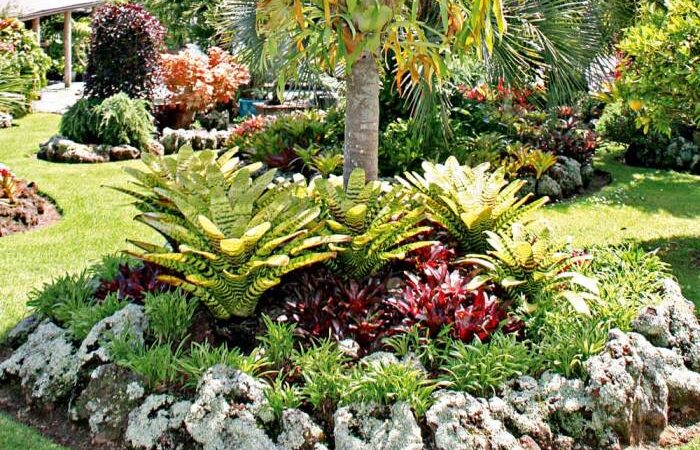
Tropical landscaping ideas for the front of the house transform your home’s exterior into a vibrant, welcoming oasis. This guide explores diverse plant selections, color palettes, and design elements to create a stunning and low-maintenance tropical front yard. We’ll delve into the art of incorporating textures, creating captivating focal points, and designing practical pathways that enhance curb appeal. Whether you envision a lush, dense paradise or a minimalist tropical haven, we offer practical advice and inspirational examples to help you achieve your dream landscape.
From selecting the perfect low-maintenance tropical plants to incorporating hardscaping elements like stone or water features, we provide a comprehensive approach to designing a front yard that reflects your style and thrives in your climate. We’ll also address crucial aspects of maintenance, including routine care, pest control, and choosing the right mulch for optimal plant health. This guide offers diverse design styles, catering to various space sizes and preferences, ensuring that every homeowner can create a beautiful and functional tropical landscape.
Plant Selection for Tropical Front Yards
Choosing the right plants is crucial for a thriving tropical front yard. Consider factors like sunlight exposure, soil type, and mature plant size to ensure a harmonious and aesthetically pleasing landscape. Below, we explore suitable plant options, focusing on low-maintenance varieties and those that offer vibrant color and texture.
Low-Maintenance Tropical Plants
These five low-maintenance tropical plants are excellent choices for busy homeowners who want a lush front yard without extensive upkeep.
| Plant Name | Sun/Shade | Mature Size | Special Features |
|---|---|---|---|
| Cordyline (Ti Plant) | Full sun to partial shade | 3-6 feet tall | Variety of foliage colors (red, purple, green); drought-tolerant |
| Schefflera arboricola (Dwarf Schefflera) | Partial shade to full sun | 3-6 feet tall | Air-purifying qualities; attractive umbrella-like foliage |
| Canna Lily | Full sun | 2-6 feet tall | Vibrant flower colors; relatively pest-free |
| Ixora | Full sun to partial shade | 3-6 feet tall | Abundant, showy blooms; various flower colors |
| Croton | Full sun to partial shade | 3-10 feet tall | Highly variable leaf colors and patterns; add striking visual interest |
Flowering Tropical Shrubs
Incorporating flowering shrubs adds bursts of color and fragrance to the tropical landscape. The following shrubs offer diverse bloom times and color palettes.
Hibiscus: Known for its large, showy flowers, hibiscus boasts a wide array of colors, including red, pink, orange, yellow, and white. They bloom prolifically throughout the warmer months.
Bougainvillea: This vigorous vine, often trained as a shrub, features vibrant bracts (modified leaves) in shades of fuchsia, purple, orange, red, and white. Blooming periods can vary depending on the climate and variety, but they generally flower abundantly during warmer seasons.
Frangipani: This fragrant shrub is prized for its intensely sweet-smelling flowers, which appear in various shades of white, yellow, pink, and orange. They bloom sporadically throughout the year, particularly during warmer months.
Palms in Tropical Landscaping
Palms are iconic elements of tropical landscapes, offering a range of heights, spreads, and aesthetic appeals. Careful selection ensures a balanced and visually stunning design.
- Adonidia (Christmas Palm): Relatively small, reaching heights of 10-20 feet, with a slender trunk and graceful fronds. Ideal for smaller spaces.
- Areca Palm (Butterfly Palm): Clumping palm with multiple slender trunks, reaching heights of 20-30 feet. Offers a lush, tropical feel.
- Royal Palm (Roystonea regia): Tall, majestic palm, reaching heights of 50-80 feet. Its striking appearance makes it a focal point in larger landscapes.
Designing with Color and Texture: Tropical Landscaping Ideas For Front Of House
Creating a visually appealing tropical front yard involves thoughtful consideration of color palettes and textural contrasts. This section details how to achieve a balanced and harmonious design.
Tropical Color Palette
Source: hzcdn.com
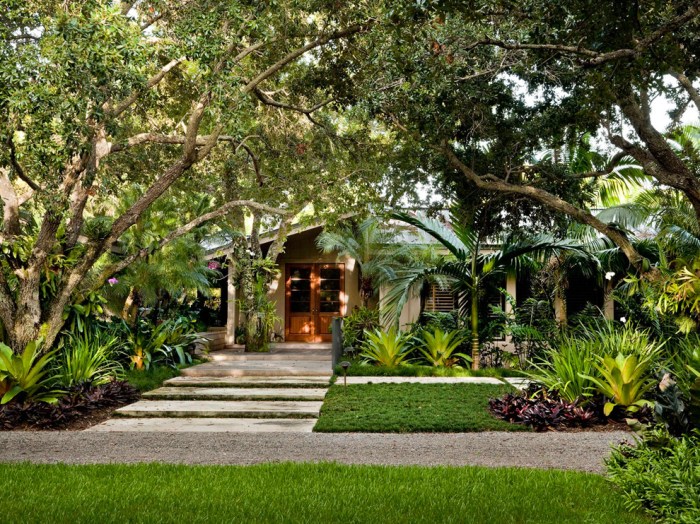
A vibrant yet balanced color palette is essential for a successful tropical landscape. Consider using warm, earthy tones as a base, complemented by bright accent colors.
Dominant Colors: Deep greens (from lush foliage), warm browns (from natural hardscaping elements like wood and stone), and sunny yellows (from flowering plants).
Accent Colors: Bright reds and oranges (from hibiscus or bougainvillea), vibrant pinks (from frangipani or other flowering plants), and pops of purple (from certain croton varieties or other foliage plants).
The rationale is to create a base of natural, calming colors that are then punctuated by brighter hues to add energy and visual interest. This prevents the design from feeling overwhelming or chaotic.
Contrasting Textures
Varying leaf shapes and sizes are key to achieving a dynamic texture. The following table illustrates plants with contrasting textures and their color coordination within the suggested palette.
| Plant | Texture Description | Color Coordination | Leaf Shape/Size |
|---|---|---|---|
| Bird of Paradise | Bold, dramatic | Deep greens, orange accents | Large, paddle-shaped leaves |
| Fern | Delicate, feathery | Light to medium greens | Small, finely divided fronds |
| Bamboo | Vertical, linear | Deep greens | Long, slender stalks |
| Elephant Ear | Large, bold, velvety | Deep greens, some with purple undertones | Massive, heart-shaped leaves |
Hardscaping Elements
Source: co.uk
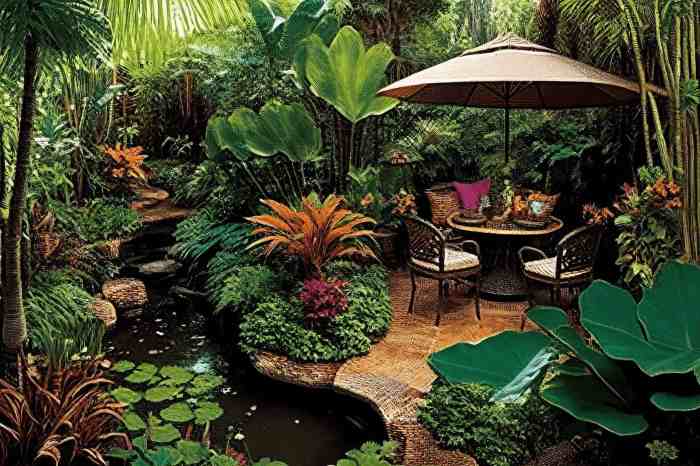
Strategic incorporation of hardscaping enhances the overall design. Natural materials like stone, wood, and water features complement the tropical theme.
Stone pathways using flagstone or river rock provide a natural, textured surface. Wood accents, such as a pergola or a decorative fence, add warmth and character. A small water feature, like a fountain or pond, introduces a soothing element and enhances the tropical ambiance. The choice of materials should reflect the overall aesthetic, creating a cohesive and visually pleasing landscape.
Creating Focal Points and Pathways
Source: futurecdn.net
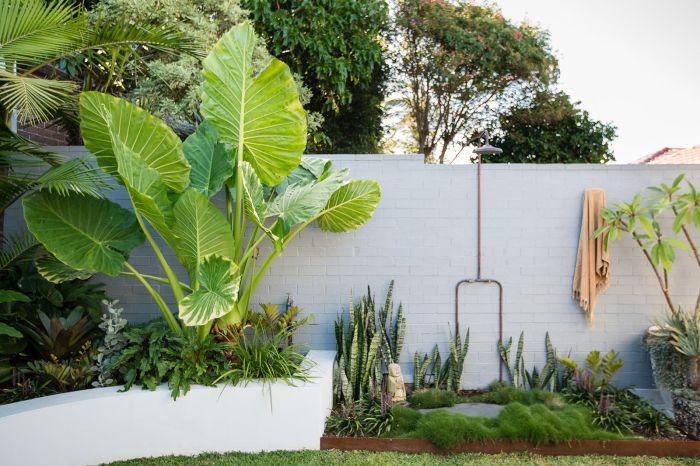
Focal points and pathways guide the eye and create a sense of flow and purpose within the landscape. Careful planning ensures a visually engaging and functional front yard.
Focal Point Design
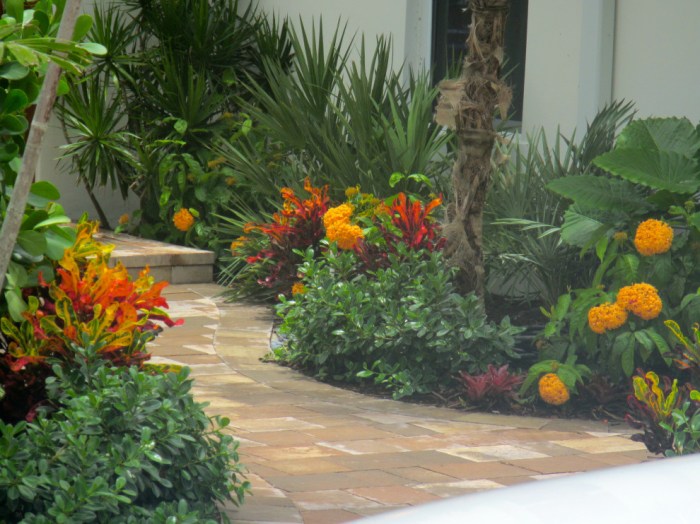
Source: hzcdn.com
A water feature serves as an excellent focal point. Imagine a small, tiered fountain constructed from natural stone, with cascading water creating a soothing sound. Surrounding the fountain, plant lush tropical foliage like ferns and elephant ears, creating a vibrant, green backdrop. Adding strategically placed accent plants, such as colorful hibiscus or croton, provides bursts of color. The overall design should aim for a balanced and visually appealing composition, drawing the eye to the center while seamlessly integrating with the surrounding landscape.
Visually Appealing Pathways
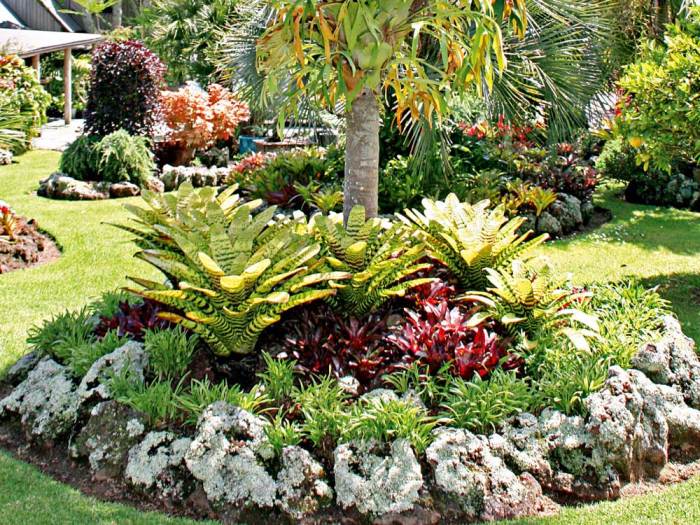
Source: net.au
Creating inviting pathways enhances the front yard’s aesthetic appeal and functionality. Several materials offer distinct visual impacts.
Gravel pathways offer a rustic charm and require minimal maintenance. Pavers, available in various materials and colors, provide a more formal look. Stepping stones, strategically placed among groundcover plants, create a natural, meandering path. The choice depends on the overall design aesthetic and practicality. The pathway should be designed to complement the surrounding landscaping, leading the eye naturally toward the front door.
Designing a Curved Pathway
A curved pathway adds visual interest and a sense of elegance. Here’s a step-by-step guide:
- Plan the layout: Sketch the pathway’s curve, ensuring a smooth and natural flow towards the front door.
- Mark the path: Use stakes or string to Artikel the pathway’s curve on the ground.
- Excavate the area: Remove topsoil along the pathway’s Artikel to create a level base.
- Install base material: Add a layer of compacted gravel or sand for drainage and stability.
- Install pathway material: Lay pavers, stepping stones, or gravel according to the chosen design.
- Plant along the path: Integrate low-growing groundcover plants or border plants to soften the edges of the pathway and create a cohesive look.
- Add hardscaping elements: Consider adding small boulders or other decorative elements to enhance the visual appeal.
Maintaining a Tropical Front Yard
Regular maintenance ensures the health and beauty of a tropical front yard. A consistent schedule and proactive pest and disease management are crucial for long-term success.
Routine Maintenance Schedule
- Watering: Water deeply and less frequently, allowing the soil to dry slightly between waterings. Adjust the watering frequency based on weather conditions and plant needs.
- Fertilizing: Apply a balanced, slow-release fertilizer in spring and fall. Adjust fertilization based on plant type and soil conditions.
- Pruning: Prune dead or damaged branches regularly. Shape shrubs and trees as needed to maintain the desired aesthetic.
- Weeding: Remove weeds promptly to prevent competition for nutrients and water.
Common Plant Diseases and Pests
Tropical plants are susceptible to various diseases and pests. Regular inspection and proactive measures are vital. Common issues include fungal diseases (like leaf spots), insect infestations (such as aphids or mealybugs), and nematode problems. Prevention strategies include proper spacing of plants to allow for good air circulation, selecting disease-resistant varieties, and maintaining good soil drainage. Treatment methods vary depending on the specific problem and may involve using organic or chemical controls.
Mulch Selection
Selecting the right mulch is crucial for moisture retention and weed suppression. Organic mulches, such as shredded bark or wood chips, are ideal for tropical landscapes. They help retain soil moisture, suppress weeds, and improve soil health. The depth of mulch should be around 2-3 inches to be effective.
Illustrative Examples of Tropical Front Yard Designs
Several design styles can create a stunning tropical front yard. The following examples illustrate the diversity of possibilities.
Lush and Dense Tropical Design, Tropical landscaping ideas for front of house
This style emphasizes abundant foliage and vibrant colors. Imagine a dense planting of various ferns, elephant ears, and other large-leaved plants, creating a lush and verdant backdrop. Brightly colored flowering plants, such as hibiscus and bougainvillea, are strategically placed to add pops of color. A winding pathway made of natural stone meanders through the planting, leading to the front door. The overall effect is one of abundance and vibrancy.
Minimalist Tropical Design
This style prioritizes clean lines and a sense of calm. It features a carefully selected palette of plants, with an emphasis on texture and form. Think of a few strategically placed palm trees, perhaps a few carefully chosen flowering shrubs, and plenty of open space. The hardscaping might consist of sleek, modern pavers and minimalist lighting. The overall effect is one of serenity and sophistication.
Modern Tropical Design
This style blends tropical elements with contemporary aesthetics. It might feature geometrically shaped planting beds, clean lines, and a focus on structural plants. Consider using a combination of tropical plants with unique leaf shapes and colors, interspersed with architectural elements like a modern water feature or a sleek, minimalist pathway. The overall effect is one of stylish simplicity and refined elegance.
Native Plant Tropical Design
Utilizing native plants creates a sustainable and ecologically sound landscape. Research local native tropical plants that thrive in the specific climate and soil conditions. These plants will require less maintenance and will attract local pollinators and wildlife. A design using native plants will be tailored to the specific region and will reflect the unique characteristics of the local ecosystem.
Small Space Tropical Design
Even small spaces can benefit from a tropical aesthetic. Vertical gardening techniques, such as using trellises or hanging baskets, maximize space utilization. Strategically placed smaller palms, flowering shrubs, and trailing plants create a sense of depth and visual interest. A compact water feature or a carefully designed pathway can further enhance the design, creating a welcoming and visually appealing entrance, even within limited space.
Expert Answers
What are some common challenges in maintaining a tropical front yard?
Common challenges include dealing with pests and diseases specific to tropical plants, managing humidity levels, and ensuring adequate watering, especially during dry spells. Regular inspection and proactive treatment are key.
How can I adapt tropical landscaping to a smaller front yard?
Choose smaller-growing tropical plants, utilize vertical gardening techniques, and select hardscaping elements that don’t overwhelm the space. Prioritize a clean, uncluttered design to maximize the visual impact.
What is the best time of year to plant tropical plants?
The ideal time is usually during the warmer months, after the last frost, to allow plants to establish strong root systems before the colder weather arrives. Check your local climate for specifics.
How often should I fertilize my tropical plants?
Frequency depends on the plant species and the type of fertilizer used. A balanced, slow-release fertilizer applied every few months during the growing season is generally recommended. Always follow product instructions.
Are there any drought-tolerant tropical plants suitable for front yards?
Yes, certain varieties of palms, succulents, and some flowering shrubs exhibit drought tolerance once established. Research plants specific to your region for best results.
Comments are closed.